Himalayan pink salt
Pink rock salt mined in Pakistan's Salt Range, south of the Himalayas. Pretty, but nutritionally almost the same as table salt.
Khewra salt
At a glance
| Origin | Khewra, Salt Range, Punjab, Pakistan |
|---|---|
| Type | Rock and spring salt |
| How it's made | Mined as rock salt, mainly at the Khewra mine in the foothills of the Salt Range, then crushed or cut into blocks. |
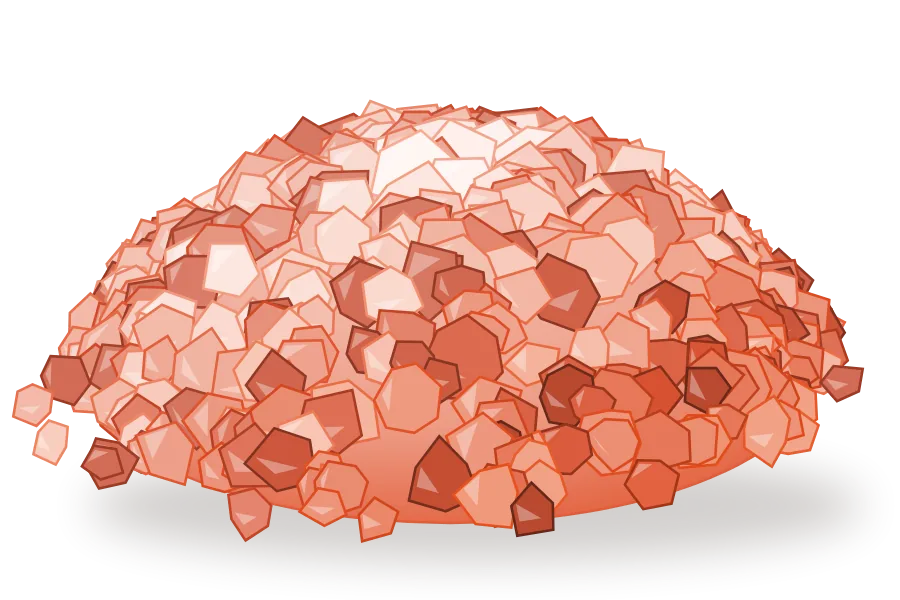
| Colour and texture | Off-white to deep pink or red, from trace minerals such as iron. Sold as grains, coarse crystals, blocks and slabs. |
| Best for | Everyday cooking like any rock salt; salt blocks for cooking or serving. |
| Swap with | Any rock or sea salt, measure for measure by weight. |
| Health claims | It is 96–99% sodium chloride. There is no scientific basis for its claimed health benefits, including those made for salt lamps. |


The story
Local legend says Alexander the Great's army found the deposit; the first recorded mining is by the Janjua clan in the 1200s. Nearly 2,000 years ago, Pliny the Elder wrote of a salt mountain in India that was quarried in blocks and earned its kings more than their gold and pearls.
What the labels claim
These health claims appear on packaging and in wellness media. We include them so you can recognise them; none is supported by good evidence.
Salt words on this page
Similar salts
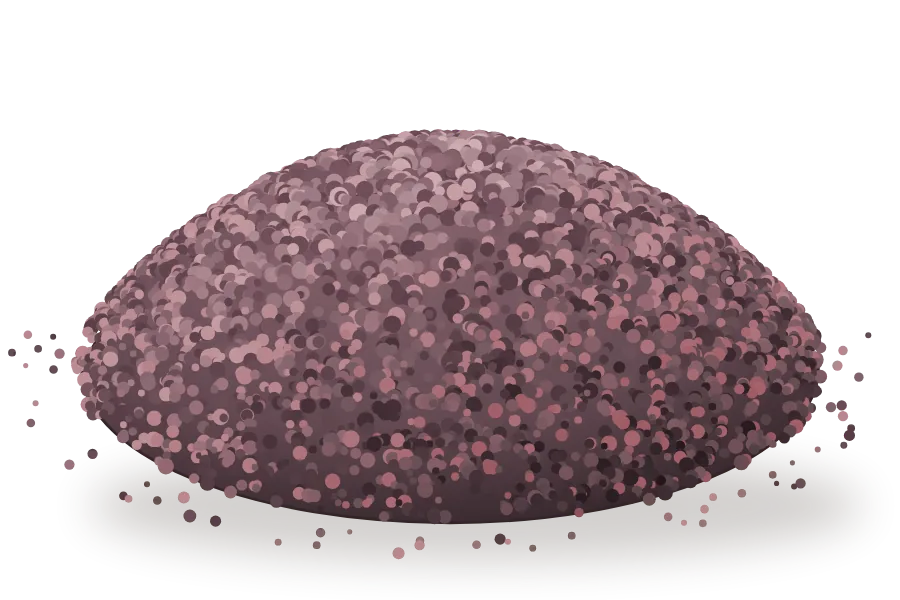 India and South Asia · Specialty saltKala namak (Indian black salt)kiln-fired, eggyBest for Chaat, raita, tofu scramble
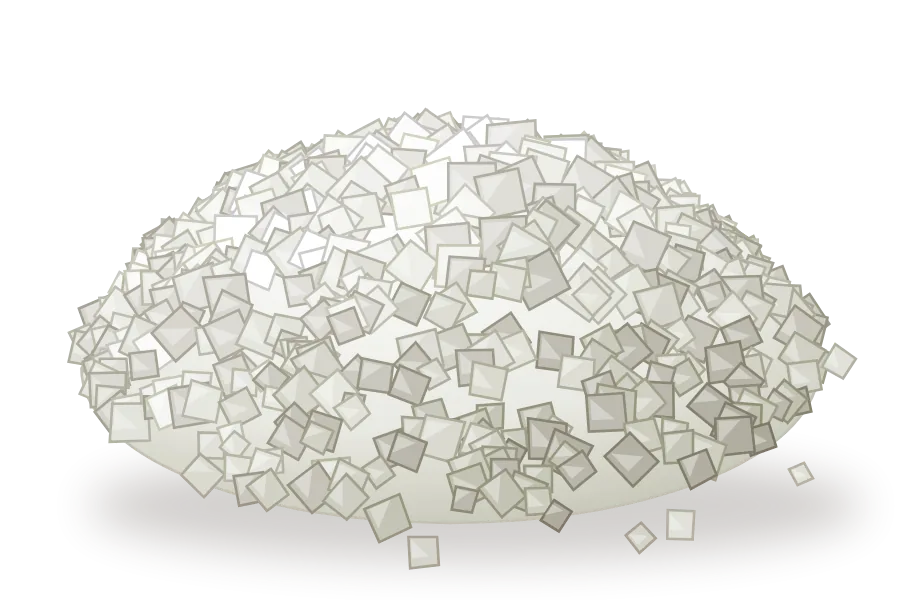 Spain · Spring saltAñana spring saltmountain spring saltBest for Cooking and finishing
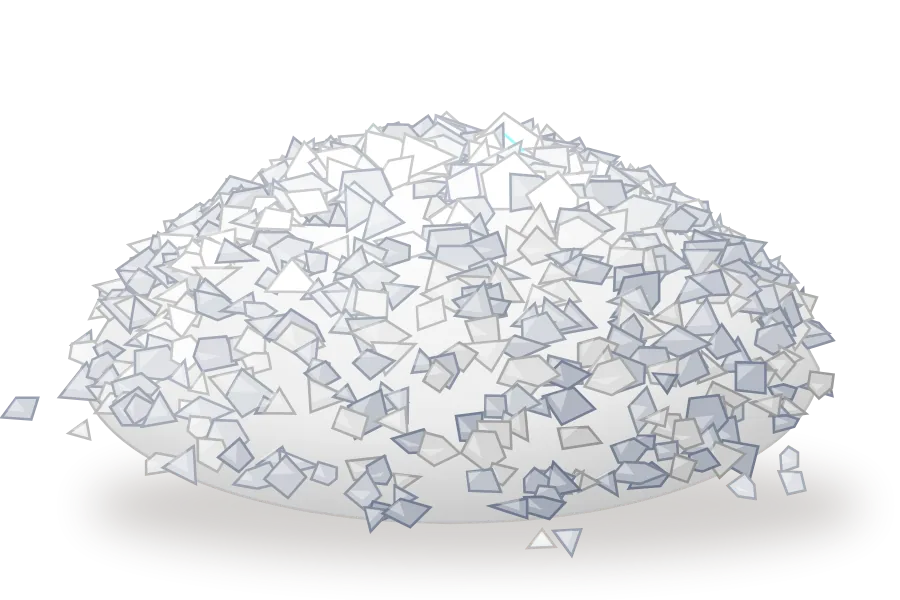 United States · Kitchen saltKosher saltcoarse kitchen saltBest for Seasoning by hand
Cite this page
For school projects and reports. Teachers often prefer the original sources too: see the list below.
The Salt Almanac. (2026, November 8). Himalayan pink salt. https://saltalmanac.com/salts/himalayan-pink-salt
“Himalayan pink salt | Salts of the World.” The Salt Almanac, 8 Nov. 2026, saltalmanac.com/salts/himalayan-pink-salt. Accessed [today's date].
“Himalayan pink salt | Salts of the World.” The Salt Almanac. Last modified November 8, 2026. https://saltalmanac.com/salts/himalayan-pink-salt.
Original sources
- Wikipedia. Himalayan salt. https://en.wikipedia.org/wiki/Himalayan_salt
- Pliny the Elder. Natural History, Book 31, ch. 39 (Bostock & Riley translation, 1855). http://www.perseus.tufts.edu/hopper/text?doc=Perseus:text:1999.02.0137:book=31:chapter=39