Asin tibuok (“dinosaur egg” salt)
A rare Filipino salt made by filtering seawater through coconut-husk ash and baking it in clay pots, sold as a whole egg-shaped block.
Asín tibuók, “unbroken salt”
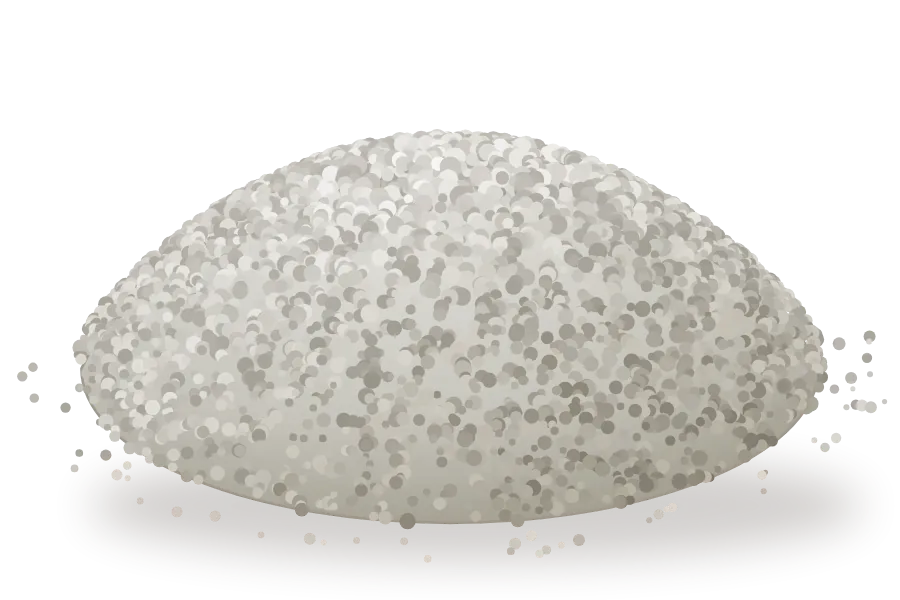
At a glance
| Origin | Bohol, central Visayas, Philippines |
|---|---|
| Type | Specialty salt |
| How it's made | Coconut husks soak in seawater pits for months, are dried and burned to ash for about a week, and seawater is filtered through the ash. The brine is boiled in clay pots in a furnace until the pots crack open around a solid block of salt. |
| Colour and texture | A hard, solid block, grated finely over food. |
| Flavour | Sharp and slightly alkaline, with smoky, fruity notes. |
| Best for | Grated over hot rice with a little oil; finishing. |
| Season | Only made from December to May, when the seawater is salty enough. |
The story
Asin tibuok is nearly extinct. It takes weeks to make, and the Philippines' 1995 salt-iodization law and cheap imported salt drove most makers out of business. It survives in a few places in Bohol, Capiz and Guimaras, and Slow Food lists it in its Ark of Taste of endangered foods.
Salt words on this page
Similar salts
 Japan · Specialty saltMoshio (seaweed salt)seaweed saltBest for Rice and vegetables
 South Korea · Specialty saltBamboo salt (jugyeom)roasted nine timesBest for Seasoning
 United States (Hawaiʻi) · Specialty saltAlaea salt (Hawaiian red salt)red volcanic clayBest for Kalua pig, poke
Cite this page
For school projects and reports. Teachers often prefer the original sources too: see the list below.
The Salt Almanac. (2026, November 8). Asin tibuok (“dinosaur egg” salt). https://saltalmanac.com/salts/asin-tibuok
“Asin tibuok (“dinosaur egg” salt) | Salts of the World.” The Salt Almanac, 8 Nov. 2026, saltalmanac.com/salts/asin-tibuok. Accessed [today's date].
“Asin tibuok (“dinosaur egg” salt) | Salts of the World.” The Salt Almanac. Last modified November 8, 2026. https://saltalmanac.com/salts/asin-tibuok.
Original sources
- Wikipedia. Asin tibuok. https://en.wikipedia.org/wiki/Asin_tibuok